
Identification and assessment of occupational risks
Nowadays, security must be placed back at the heart of companies. To achieve this, identifying and assessing occupational risks is a major challenge. Anticipating these threats is essential to ensure optimal management in the event of a crisis. To do this, it is essential to precisely understand each type of risk. Then, tailored solutions for each scenario will be implemented. The main goal is to prevent any business interruption.
High-risk company classifications (SEVESO, ICPE...)
First, let's recall that identifying and assessing occupational risks are essential for all types of companies. However, taking these risks into account is all the more crucial in the industrial sector. Indeed, it includes sites exposed to high levels of risk. We find two types of companies that are more sensitive to risk management
Facilities classified for environmental protection (ICPE)
Companies subject to the SEVESO directive
These companies carry out activities that can be harmful to people and the environment. In the event of a disaster, they are subject to strict standards and regulations. These parameters, such as the toxicity of the substances used, must be taken into account when assessing occupational risks. It is therefore necessary for operators of these sites to establish emergency and safety plans. In addition, implementing an Internal Operations Plan (IOP) is crucial for minimizing risks at high-risk companies. Another element not to be overlooked in risk prevention is regularly conducting simulation exercises under crisis management circumstances. This aspect is essential, first, to train employees in the right reflexes to adopt. Second, these exercises will be useful for highlighting potential gaps in the management of a crisis situation so they can subsequently be corrected. CountAct can support you in organizing these simulation exercises. We will develop a scenario tailored to your risk profile. We will then together carry out an analysis of the strengths and weaknesses of your crisis management methods. Feel free to contact us directly through our website!
Because SEVESO-classified companies handle substances that can cause major accidents, the consequences of a poorly managed risk go far beyond the workplace and can affect nearby residents and the environment. This makes rigorous risk assessment and prevention especially critical for these sites.
The different types of risk
All companies are exposed to various types of risk depending on their type: tertiary, industrial, ICPE, SEVESO... We have compiled a (non-exhaustive) list of the main risks that employees are exposed to within a company, in a previous article that we recommend you check out: "Types of risks in the workplace" The variety of risks companies face highlights the importance of precise identification in order to deploy tailored solutions. Effectively managing these risks is crucial to ensuring worker safety and the company's long-term viability. In this regard, CountAct can help you identify the risks you are exposed to. Once these risks have been identified, we can offer you a customized digital solution. It will be tailored to your company type for emergency management in terms of safety and security. Let's now look at a quick guide to help you assess your risks.
Occupational Risk Assessment (ORA)
Once the different types of risk have been identified, each occupational risk identified must be dissected, assessed, and reduced.Occupational risk assessment (ORA) emerges as an essential pillar of workplace safety management. This practice aims to identify, assess, and control the hazards present in the work environment of all employees. As an employer, you must guarantee the safety and look after the health of your employees. Occupational risk assessment (ORA) is a tool that allows you to fulfill this responsibility. To carry out an occupational risk assessment (ORA), 4 major steps must be followed:
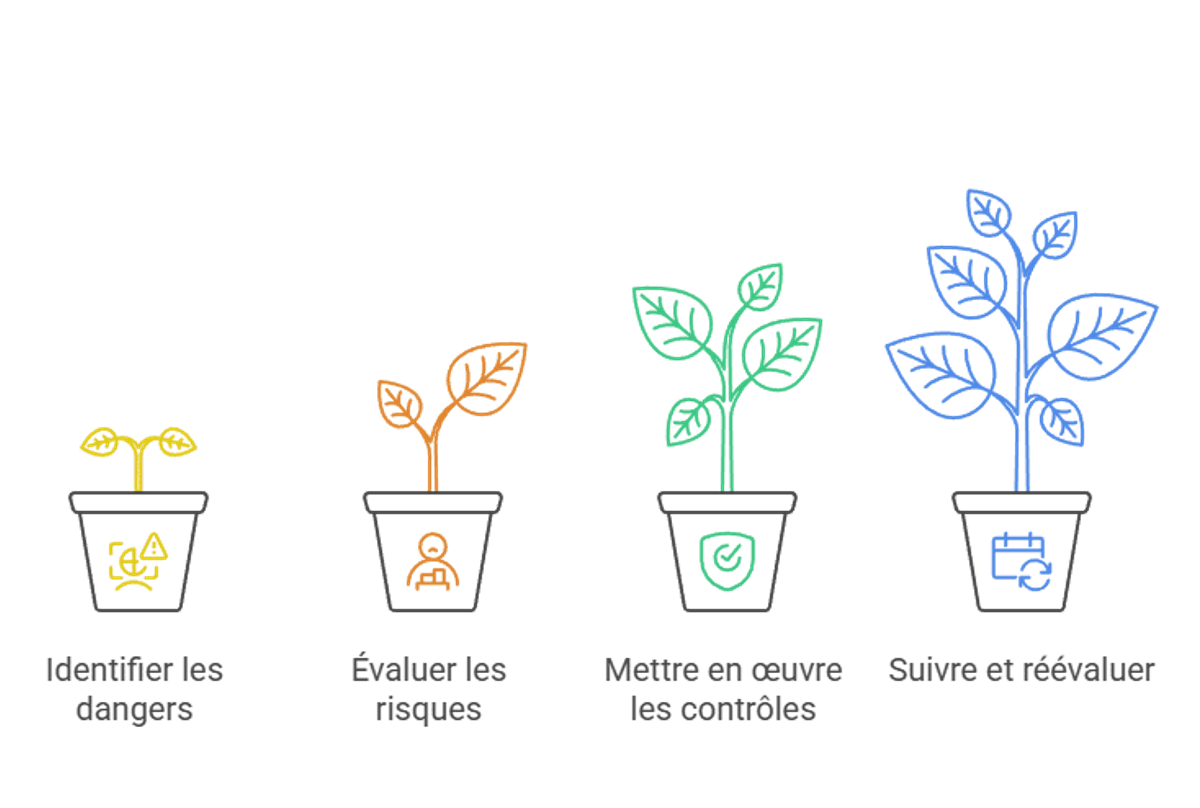
By following these steps, companies can establish a solid and efficient occupational risk assessment process to ensure the safety and health of their employees in the workplace. You will then record this assessment in the Single Occupational Risk Assessment Document (DUERP). Once your risks have been identified and assessed, the next step will be to implement concrete actions to minimize these risks and their impact on your business. We strongly recommend implementing a risk mitigation plan for this purpose.
The mitigation plan
Finally, once you have fully grasped your company's security challenges, we recommend establishing a risk mitigation plan. Mitigation aims to minimize the harmful consequences of undesirable events. Whether to deal with natural hazards or industrial risks, establishing a mitigation plan has become essential. The steps discussed earlier in this article will help establish this mitigation plan. Thus, the first step in setting up a mitigation plan, identifying and assessing risks, will already have been completed during the occupational risk assessment. Next, all that remains is to develop and implement the risk mitigation plan. Tip: Be sure to adopt a proactive and flexible approach to respond to evolving challenges and new threats. Once again, if setting up a risk mitigation plan seems complex to you, feel free to contact us by booking an appointment directly through our website! We would be delighted to help you build this plan together! In summary, risk management is crucial to ensuring worker safety and business continuity. Establishing emergency and safety plans, as well as implementing mitigation measures, are essential to being ready and effective during an emergency situation. Adopt a proactive approach and contact us for personalized support in developing your risk identification and assessment measures!
Need help building your risk assessment and mitigation plan?
Our team can support you in identifying your occupational risks and structuring an effective prevention plan tailored to your company's classification and activity.
SécuQuiz
Test your knowledge
Question 1 sur 5
Which two classifications apply to companies especially exposed to high industrial risk?
Sources & references
- nous contacter — calendar.google.com
Frequently asked questions
Tom BasinStrategic Partnerships Manager
Holding a Master's degree in risk prevention, Tom Basin serves as Partnerships Manager at CountAct, contributing to the development and rollout of the first turnkey crisis management support solution, with the aim of putting security back at the heart of businesses. His experience, along with his training at the Master's level and at the Institut national des hautes études de la sécurité et de la justice, gives him a broad perspective on security and crisis management.