
ICPE & SEVESO Safety: An Essential Guide
In the industrial world, safety and environmental preservation are major concerns. This is especially true when it comes to facilities classified for environmental protection (ICPE) or companies subject to the SEVESO directive. These classifications, essential for managing industrial risks, aim to prevent major accidents involving hazardous substances in particular.
What does ICPE mean?
Facilities Classified for Environmental Protection (ICPE) are industrial or agricultural facilities located in France that pose risks to the environment, health, or public safety. These facilities are subject to strict regulations, requiring authorizations, declarations, or registrations depending on the level of risk they present.
How do you know if a site is classified as ICPE?
To determine whether a site is classified as an Installation Classified for Environmental Protection (ICPE), it is advisable to consult the public registers and official databases maintained by the competent authorities, such as the Ministry of Ecological Transition in France. These registers list all facilities subject to declaration, registration, or authorization under ICPE regulations. A search can also be carried out on the websites of the prefectures or the Regional Directorates for the Environment, Planning, and Housing (DREAL). In addition, the GéoRisques tool, made available by the DREAL, provides accurate information on regulated facilities.
What are the ICPE standards?
ICPE standards cover various aspects, such as:
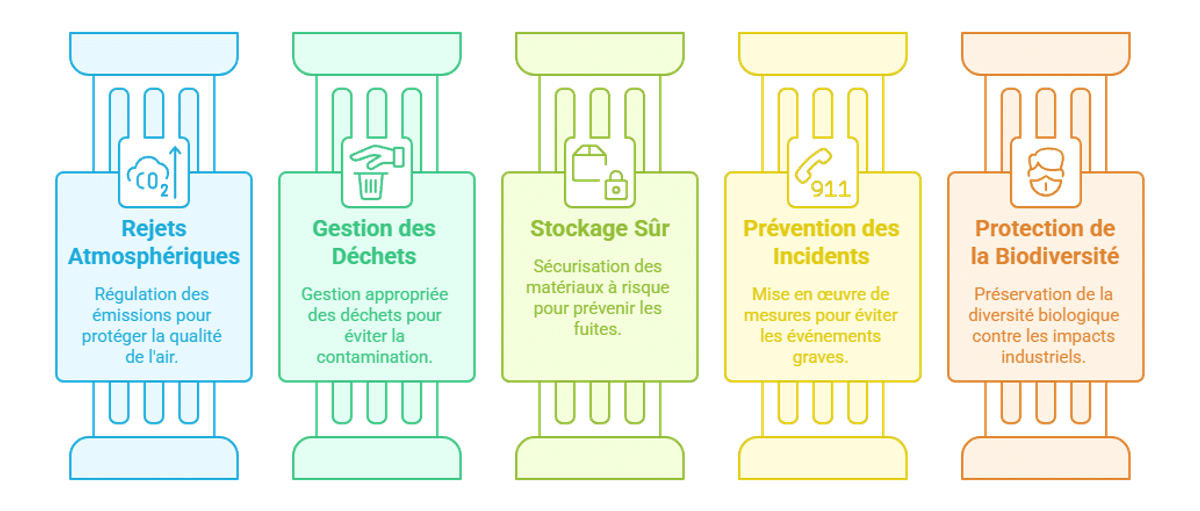
They are tailored to the nature and size of each facility. They may include specific requirements such as emission thresholds, safety procedures, environmental monitoring measures, and emergency plans. Operators of ICPE facilities must obtain authorizations. To do so, they must file declarations or complete registrations with the competent authorities. Moving from ICPE standards to SEVESO directives, regulations evolve to encompass even stricter safety measures for managing risks related to hazardous substances.
What does SEVESO mean?
The term SEVESO refers to a series of European directives designed to prevent the risk of major accidents involving hazardous substances. The SEVESO directives aim to establish strict safety standards for high-risk facilities, requiring accident prevention, emergency preparedness, and response measures. In addition, they require operators to inform the public of potential risks and the safety measures in place, thereby strengthening transparency and protection for surrounding communities.
How is a site classified as SEVESO?
A site becomes SEVESO-classified based on the quantity of hazardous substances it holds. There are two levels: lower tier and upper tier. Crossing these thresholds determines the classification. The criteria include the toxicity and flammability of the products. Operators must inform the authorities of the risks and safety measures in place. This includes emergency plans and safety management. In this way, the local community stays informed for its own safety. The goal is to reduce the risk of major accidents. With this in mind, CountAct offers a comprehensive solution for effective crisis management. This solution provides complete functionality for an appropriate response during emergencies. Through a digital tool, it makes it possible to coordinate emergency actions such as evacuations or shelter-in-place measures. A crucial solution for emergency management at a SEVESO site.
How many SEVESO sites are there in France?
The number of SEVESO sites in France is constantly changing, due to shifts in industrial activity and regulatory updates. In 2024, France has 1,350 sites classified as SEVESO: 623 lower-tier and 727 upper-tier.
What to do in the event of a SEVESO alert?
Procedure
In the event of a SEVESO alert, it is crucial to act quickly and follow established procedures to ensure everyone's safety. Here are the steps to follow:
Stay informed: Listen carefully to instructions from local authorities via official media and the local radio station France Bleu (98.2MHz or 102.8 MHz).
Don't panic: Staying calm allows you to react thoughtfully and effectively.
Shelter in place: If instructed to do so, stay indoors, close doors and windows. Also remember to seal any openings (even the smallest ones), and turn off ventilation systems to prevent hazardous substances from entering. Also shut off gas and electricity for added safety. Finally, do not smoke to avoid any additional risk.
Avoid using the phone: Except in an emergency, so as not to overload the lines.
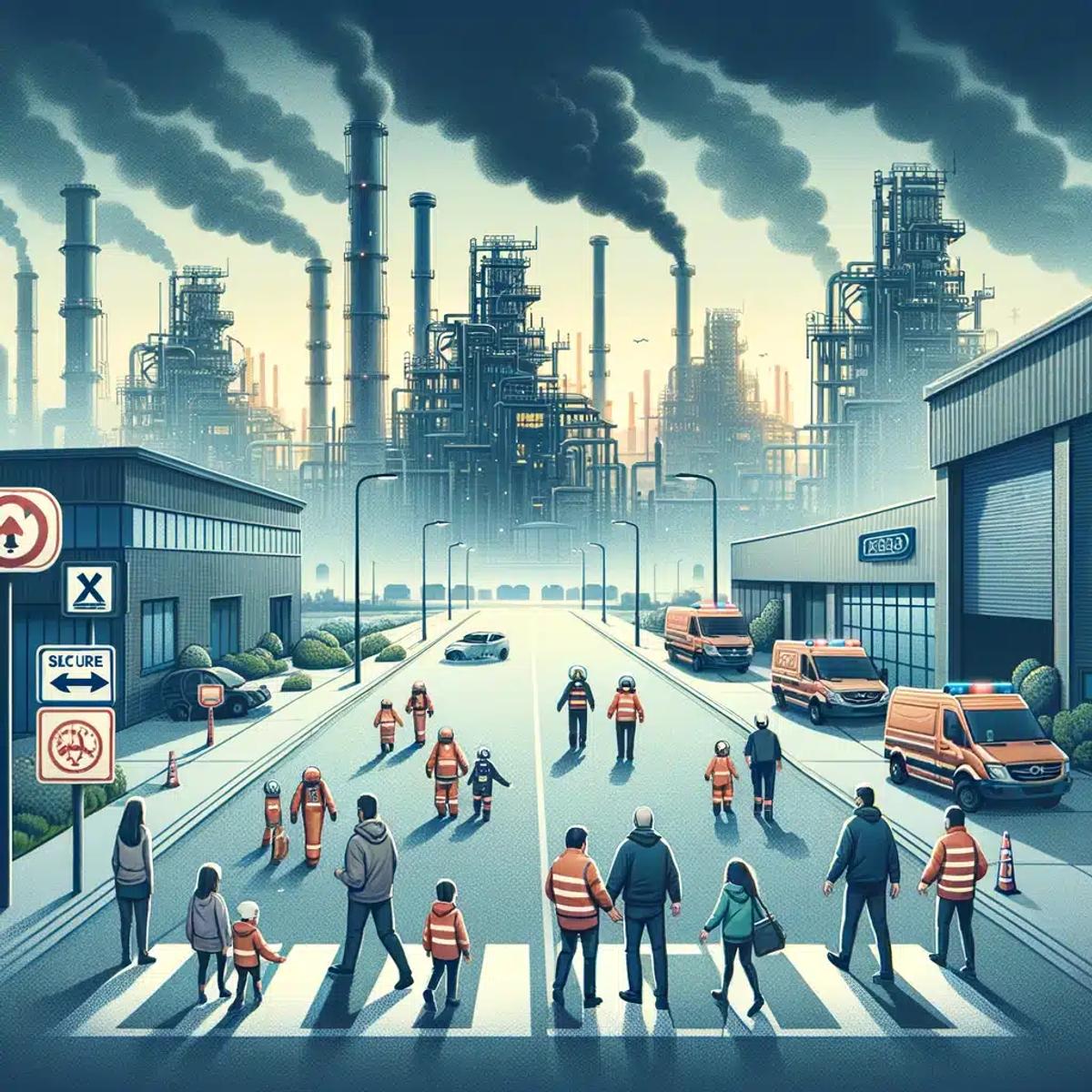
Follow evacuation instructions: If an evacuation is ordered, follow the specified routes. Otherwise, take shelter in the nearest building and do not go out to pick up your children from school; schools have protocols in place to ensure their safety.
Do not touch any suspicious substances: Avoid any contact with unidentified liquids or fumes.
Prepare an emergency kit: Keep water, food, essential medications, and warm clothing on hand in case of evacuation.
Stay away from the site: If you are outside the alert zone, stay away until authorities confirm it is safe to return.
Never approach a SEVESO site during an alert, even out of curiosity. Wait for an official all-clear from local authorities before resuming normal activity.
Solution
To minimize risks during a SEVESO alert, it is crucial to have an Internal Operations Plan (POI). This details the specific procedures to follow in the event of an accident at a SEVESO site. But it is also important to take part in simulation exercises. CountAct facilitates the creation and the running of these simulations, tailored to different crisis scenarios. In this way, companies learn to manage emergencies, improving their preparedness and responsiveness. With CountAct, regular simulations enable a coordinated and effective response. This reduces the impact of a SEVESO alert. In addition, our tool also offers natural and technological risk analysis. This analysis details exposure to major risks and integrates into a Business Continuity Plan and into the DUERP. Finally, we also provide accurate information, linked to your DCRIM.
Need help building your Internal Operations Plan?
Our experts support ICPE and SEVESO-classified facilities in designing and implementing compliant, effective emergency response plans.
SécuQuiz
Test your knowledge: ICPE & SEVESO sites
Question 1 sur 5
What does ICPE stand for?
Sources & references
- Les Installations Classées pour la Protection de l'Environnement — entreprendre.service-public.fr
- Directions Régionales de l'Environnement, de l'Aménagement et du Logement (DREAL) — www.auvergne-rhone-alpes.developpement-durable.gouv.fr
- GéoRisque — www.georisques.gouv.fr
- Le terme — www.ecologie.gouv.fr
- cas d'alerte — www.seine-maritime.gouv.fr
- Plan de Continuité d’Activité — www.economie.gouv.fr
Frequently asked questions
Tom BasinStrategic Partnerships Manager
Holding a Master's degree in risk prevention, Tom Basin serves as Partnerships Manager at CountAct, contributing to the development and rollout of the first turnkey crisis management support solution, with the aim of putting security back at the heart of businesses. His experience, along with his training at the Master's level and at the Institut national des hautes études de la sécurité et de la justice, gives him a broad perspective on security and crisis management.