
The duty to inform the public in businesses at risk
Cohabitation between high-risk companies and local populations raises crucial issues in terms of safety. Moreover, in a world where companies often operate side by side with local communities, the question of the duty to inform the population takes on crucial importance. In this article, we will help you understand the challenges of this cohabitation. We will then define the legal framework governing these companies' obligations to inform the population. Finally, we will give you tips for establishing clear and transparent communication, with the aim of establishing responsible cohabitation based on the duty to inform, which benefits all stakeholders.
Understanding the challenges of the duty to inform
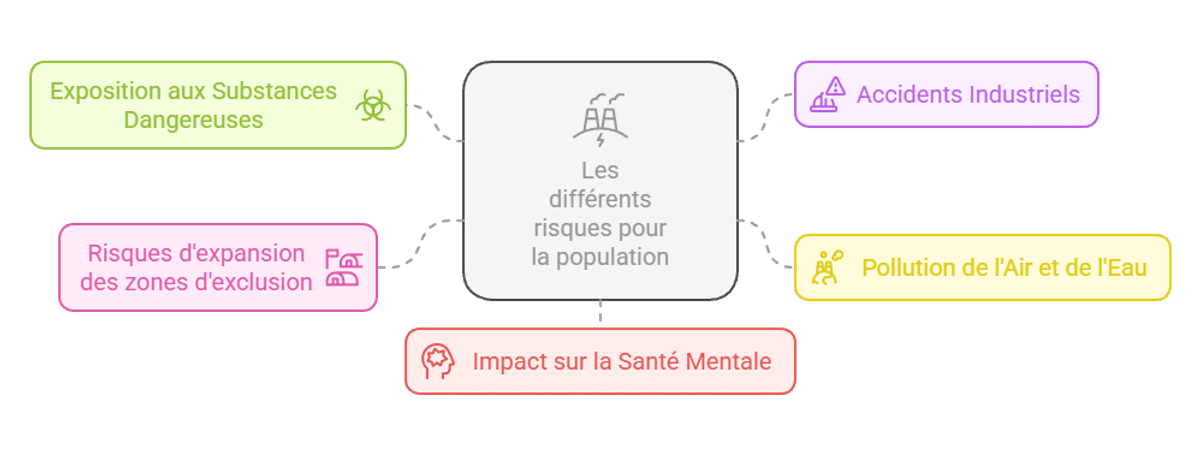
The coexistence of several high-risk companies in the same area can present potential dangers for the surrounding populations. The duty to inform these populations of the risks to which they are exposed is therefore crucial. Here are some of these risks for the populations:
1) Exposure to hazardous substances:
If companies handle toxic, flammable, or harmful substances, the surrounding populations could be exposed to risks to their health, notably through inhalation of chemical products, skin contact, or contamination of water and soil.
2) Industrial accidents:
The proximityof high-risk companies increases the likelihood of industrial accidents such as explosions, fires, etc. These incidents can cause serious injuries and have numerous impacts on neighboring residents.
3) Air and water pollution:
These industrial accidents can result in air and water pollution. This will affect the quality of life of the surrounding populations and their health in the long term. Emissions of air pollutants and discharges of chemical products into waterways can have harmful effects on health and the environment.
4) Risk of expanding exclusion zones:
In the event of a major accident/industrial disaster, authorities may need to establish exclusion zones or evacuations. This would disrupt the lives of local populations and could cause significant socio-economic problems.
5) Impact on mental health:
The perception of risks related to the activities of high-risk companies can also have an impact on the mental health of surrounding populations. The constant fear of industrial accidents or exposure to chemical products can lead to stress, anxiety, and other mental health problems.
It is therefore essential to implement effective prevention and protection measures to reduce the risks for surrounding populations. In particular by strengthening regulations, raising awareness among local populations, and developing appropriate emergency plans.
What is the industrial risk index?
The industrial risk index is a tool used to assess and quantify the risks associated with industrial activities in a specific region. It takes into account various factors such as the nature of the industries present, the chemical substances used, the safety measures implemented, etc. This industrial risk index allows authorities, companies, and stakeholders to better understand potential risks and to implement preventive measures to protect the safety of workers, the environment, and surrounding populations. The assessment and communication of industrial risks are closely linked to the duty to inform the population. Indeed, the industrial risk index allows authorities and companies to better understand the potential dangers associated with industrial activities in a given region. By disclosing this information transparently and accessibly, authorities can fulfill their obligation to inform the population of the risks to which it is exposed. Thus, thanks to the industrial risk index, populations have a means of understanding the risks that surround them. This transparency also promotes citizen participation in decision-making processes concerning industrial safety and land use planning. This thereby strengthens public trust in risk prevention measures. The industrial risk index (RI) serves as a reference for indexing corporate property damage insurance contracts. These contracts concern insured assets (equipment and/or goods) whose value exceeds 150 times the value in euros of the industrial risk index (RI), as specified in the FFSA's Corporate Risk Treaty.
Avant d'emménager ou d'investir dans une zone industrielle, consultez le site officiel Géorisques pour connaître l'exposition précise d'une adresse aux risques technologiques et naturels.
Identifying potential industrial risks to the population and the environment
First of all, identifying industrial risks helps prevent major incidents. By anticipating potential dangers such as industrial accidents or chemical leaks, a company can take preventive measures to reduce the likelihood of these devastating events. We recommend implementing mitigation plans in order to anticipate industrial risks and minimize their impact. Next, this helps protect workers and the surrounding public. By identifying industrial risks, a company can implement safety protocols and provide adequate training to its staff. In addition, it will be able to communicate the risks to relevant stakeholders to ensure everyone's safety. Similarly, identifying industrial risks allows for better crisis management. By being aware of potential dangers, a company is prepared to face possible emergency or crisis situations. In this sense, once your industrial risks have been identified and assessed, CountAct can help you increase your efficiency in emergency situations. Thanks to a digital solution customizable according to your risk typology, your crisis management will be significantly simplified and truly effective. You will now have the right reflexes at your fingertips. In addition, identifying industrial risks ensures regulatory compliance. Companies classified as ICPE or SEVESO must comply with strict regulations regarding health, safety, and the environment. By identifying and managing risks, a company can ensure that it complies with all applicable laws and regulations.
What laws and regulations are related to the duty to inform?
Here are some of the regulations in force concerning the duty to inform citizens about major risks:
1) Law of July 22, 1987:
The law of July 22, 1987, relating to the organization of civil security, the protection of forests against fire, and the prevention of major risks, introduced for the first time in French legislation the obligation of preventive information on major risks. This law laid the foundations for the duty to inform and raise citizens' awareness of the risks to which they are exposed.
2) Environmental Code:
The provisions relating to the duty to inform about major risks are now incorporated into the Environmental Code. Article L. 125-2 of the Environmental Code establishes the right to information on major risks and the safeguard measures concerning them.
3) Decree of October 22, 2005:
Decree No. 2005-1156 of October 22, 2005, relating to the information of populations living near facilities classified for environmental protection, strengthens companies' information obligations regarding major industrial risks and establishes the terms for communication with the population.
4) Seveso Directive:
The European Seveso directive, transposed into French law by Decree No. 77-1133 of September 21, 1977, imposes obligations on major-risk companies regarding information and consultation with public authorities and the population on potential dangers and prevention measures.
5) Prefectoral order:
Prefectoral authorities may also issue orders to specify the terms of information and awareness-raising for populations regarding major risks specific to their territory, as well as the safeguard measures to be implemented. These laws and regulations aim to ensure that citizens have the information necessary to protect themselves and react in the event of danger, thereby fostering greater awareness of major risks within society. As an example, we can cite the "Good Reflexes" Campaign initiated by the prefect of the Auvergne-Rhône-Alpes region. Indeed, this regional information campaign on major industrial risks aims to inform people about high-risk industrial activities in Auvergne-Rhône-Alpes, the means of alert in the event of an accident, as well as the actions to take if the alert is triggered. These information campaigns therefore constitute a local initiative that helps best apply the regulatory obligation to inform about risks.
How to establish responsible cohabitation between a high-risk industrial company and the surrounding population?
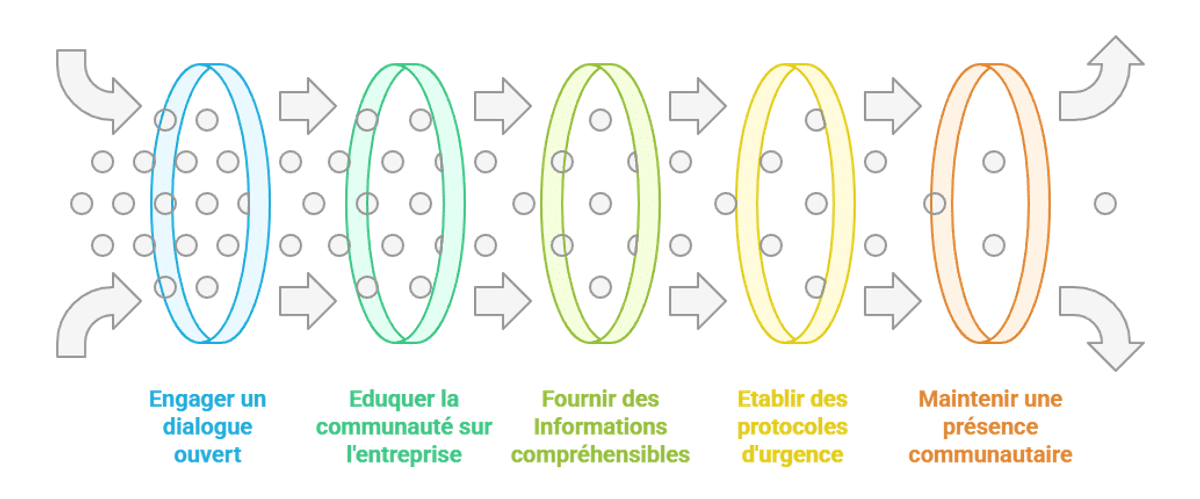
Establishing responsible cohabitation between a high-risk industrial company and the surrounding population depends on the duty to inform. In addition, it requires a proactive and collaborative approach. Here are some steps to achieve this:
1) Engage in open and transparent dialogue:
Create regular spaces for dialogue where company representatives and community members can meet to discuss mutual concerns, needs, and expectations.
2) Educate the community about the company's activities:
Provide clear and accessible information on:
the company's operations
the potential risks of industrial accidents
the measures taken to ensure safety and environmental protection.
3) Provide understandable information:
Use simple language and visual aids to:
explain industrial processes
potential risks
safety measures to community members, avoiding technical jargon.
4) Establish emergency and communication protocols in the event of an incident:
Develop detailed emergency plans in collaboration with the community to deal with potential incidents. Ensure that communication procedures in the event of an emergency are clear and accessible to everyone.
5) Maintain an active presence within the community:
Actively engage with the community:
by participating in local events
by supporting community initiatives
by being available to answer questions and address concerns.
In conclusion, transparent and proactive communication is crucial for building trust. By adopting a collaborative approach, high-risk companies can establish positive relationships with the surrounding population. They can also strengthen mutual trust. And finally, ensure responsible cohabitation that benefits all stakeholders.
Besoin d'un diagnostic des risques industriels pour votre bien ?
Nos experts vous accompagnent pour évaluer l'exposition d'un bien aux risques industriels et vous aider à respecter vos obligations d'information.
SécuQuiz
Test your knowledge
Question 1 sur 5
Which law first introduced the obligation of preventive information on major risks into French legislation?
Sources & references
- prévenir les incidents majeurs — www.ecologie.gouv.fr
- devoir d’information des citoyens sur les risques majeurs — www.mementodumaire.net
- L'article L. 125-2 du Code de l'environnement — www.legifrance.gouv.fr
- Le décret n°2005-1156 du 22 octobre 2005 — www.legifrance.gouv.fr
- décret n°77-1133 du 21 septembre 1977 — www.legifrance.gouv.fr
- Campagne des bons réflexes — www.lesbonsreflexes.com
Frequently asked questions
Tom BasinStrategic Partnerships Manager
Holding a Master's degree in risk prevention, Tom Basin serves as Partnerships Manager at CountAct, contributing to the development and rollout of the first turnkey crisis management support solution, with the aim of putting security back at the heart of businesses. His experience, along with his training at the Master's level and at the Institut national des hautes études de la sécurité et de la justice, gives him a broad perspective on security and crisis management.