
The role of the DREAL and the Labor Inspectorate
In today's professional world, where work dynamics are evolving, health and safety at work is essential. More than ever, they are recognized as fundamental rights of workers and their well-being. It is crucial to adopt robust measures to address new challenges and technologies in order to protect employee health. In this context, the Regional Directorate for the Environment, Planning and Housing (DREAL) and the Labor Inspectorate stand out as key players. The role of the DREAL and the labor inspectorate is essential in maintaining and promoting health and safety standards at work.
The Role of the Labor Inspectorate in Health and Safety at Work
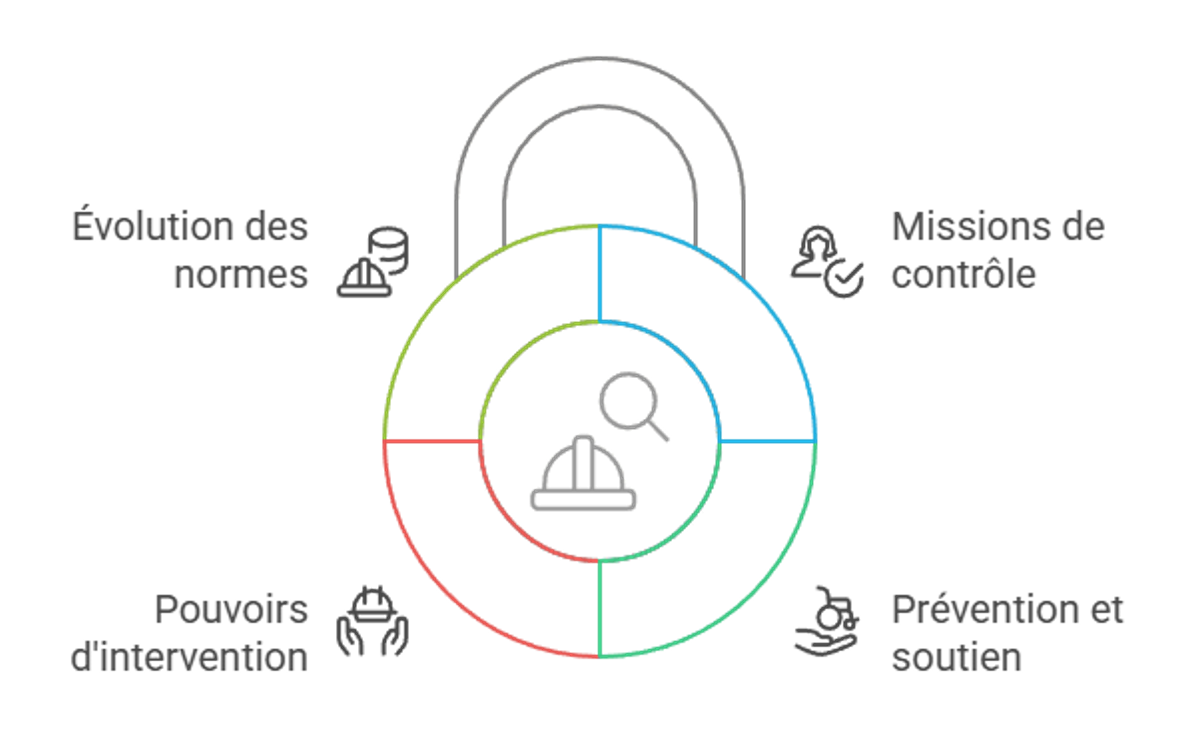
Constant Vigilance to Protect Workers
The Labor Inspectorate enforces laws to protect workers' rights and health. It monitors compliance with the Labor Code, ensuring that employers guarantee a safe working environment. Preventing psychological harassment is a key mission. At the same time, promoting safe working conditions is also a priority. Combating psychosocial risks, such as psychological harassment, is vital for a healthy work environment.
A Firm Commitment Against Psychological Harassment
Psychological harassment at work is a serious modern scourge, harming well-being and productivity. The Labor Inspectorate acts to detect and prevent these cases, providing a strict legal framework. It provides effective means to combat this psychological violence. Employers are made aware of the signs of harassment and of preventive practices. In this regard, detecting Psychosocial Risks proves difficult and sensitive within companies.
What Penalties Do Negligent Employers Face?
In the face of employers who fail to act against psychological harassment, the Inspectorate can take firm action. The Labor Code provides for fines or imprisonment for negligence. These measures underscore the severity of harassment and drive prevention efforts. They aim for a work environment free of harassment, safe, and respectful.
Employers who fail to address psychological harassment can face administrative sanctions, financial penalties, and even criminal liability. Acting promptly on reports is not optional, it is a legal obligation.
What Should You Do If You Witness Harassment at Work?
Being a witness to workplace harassment calls for action and solidarity to maintain a healthy environment. Who can alert the Labor Inspectorate? In reality, anyone can. Employees, managers, representatives, or outside observers can and should report harassment.
Employer Obligations
Regarding employer obligations, they are broad and crucial for ensuring a healthy and safe working environment. Here is an in-depth look at these obligations:
Organize safety drills at least twice a year, including training on preventing psychological harassment and promoting well-being at work.
Adapt safety and prevention measures to the context of remote work, where harassment can also occur.
Provide regular training and ensure that employees obtain the necessary certifications to create a healthy and safe working environment.
Toward a Healthy Work Environment: Prevention with CountAct
Strengthen Your Prevention Policy
CountAct helps you build a compliant, effective health and safety prevention program tailored to your workplace.
The Labor Inspectorate's commitment highlights a fundamental truth: the fight against psychological harassment and psychosocial risks goes beyond legal obligation to become a foundation of well-being and efficiency within the company. Beyond mere compliance, actively preventing psychosocial risks, including psychological harassment, and thoughtfully managing these harmful behaviors are crucial to cultivating a work environment that is healthy and respectful. With this in mind, companies are not left to fend for themselves. Solutions such as CountAct offer powerful tools to strengthen responsiveness to the daily challenges related to safety and psychosocial risks. CountAct stands out for its ability to facilitate internal communication, allowing employees to easily report any incident, whether it be assault or cases of psychological harassment or other psychosocial risks. This increased transparency gives employers the means to intervene effectively and make informed decisions, fostering a professional environment where safety and care are the norm.
DREAL: A Key Player in Environmental Safety
The DREAL regulates and oversees the environmental impact of activities. Its role extends beyond the environment, touching on workplace safety. Environmental safety managed by DREAL influences working conditions. This is crucial in industries and companies with environmental risks. DREAL intervenes in a variety of situations: from controlling polluting emissions to monitoring facilities classified for environmental protection (ICPE) and SEVESO sites. These sites are required to have an Internal Operations Plan (IOP) that is tested and kept up to date annually to ensure effective management of major accident risks that could affect the environment and the safety of people. Through its actions, it helps minimize the risk of industrial accidents that could endanger the health and safety of workers. For example, by imposing strict standards for the management of hazardous substances, DREAL ensures a safer working environment for employees exposed to these risks.
Best Practices for Successful Collaboration with DREAL and the Labor Inspectorate
Preparing for Visits from DREAL and the Labor Inspectorate
One of the keys to a successful inspection is preparation. This starts with a solid understanding of the regulatory requirements specific to your industry. Make sure that all necessary documents and records are up to date and easily accessible. This includes employee training records, safety protocols, risk assessments, and so on. A prior internal audit can help identify and correct any non-compliance issues before the inspection.
Transparency and Proactive Communication with DREAL and the Labor Inspectorate
Transparency is fundamental in the relationship with DREAL and the Labor Inspectorate. In the event of problems or incidents, take the initiative to report them. Indeed, this approach can mitigate the consequences of potential non-compliance. Furthermore, proactive communication is also essential for informing these organizations of the changes or improvements you have made.
Integrating Recommendations into Daily Practices
The recommendations of these organizations should not be seen as obligations to be fulfilled temporarily. They should be integrated into the company's daily practices to continuously improve health and safety at work. This often involves regularly training and raising employee awareness of new protocols and best practices. Using digital tools, such as CountAct, can greatly facilitate this integration. For example, CountAct automates certain procedures while improving the traceability and monitoring of corrective actions. In conclusion, commitment to health and safety at work is an ongoing effort. It requires the involvement of all stakeholders within the company and the support of regulatory bodies. Through the use of appropriate solutions, it is possible to build work environments that are compliant and conducive to health. In this mission, CountAct proves to be a valuable partner in the service of health and safety at work.
SécuQuiz
Test your knowledge
Question 1 sur 5
Which organization oversees the environmental impact of activities and extends its role to workplace safety, particularly in industries with environmental risks?
Sources & references
- Direction Régionale de l'Environnement, de l'Aménagement et du Logement — www.auvergne-rhone-alpes.developpement-durable.gouv.fr
- Code du travail — www.legifrance.gouv.fr
- CountAct — calendar.google.com
Frequently asked questions
Tom BasinStrategic Partnerships Manager
Holding a Master's degree in risk prevention, Tom Basin serves as Partnerships Manager at CountAct, contributing to the development and rollout of the first turnkey crisis management support solution, with the aim of putting security back at the heart of businesses. His experience, along with his training at the Master's level and at the Institut national des hautes études de la sécurité et de la justice, gives him a broad perspective on security and crisis management.