
Impact of performance indicators on health and safety
Health and safety at work are crucial in any organization. They are both legal obligations and ethical responsibilities. However, establishing rules and procedures is not enough. It is crucial to track and regularly evaluate their performance. This requires an approach where the impact of performance indicators on health and safety becomes central. The goal is to establish a zero-accident policy within a company. A task that companies struggle to implement effectively. This is where health and safety performance indicators come in. Let's take a closer look at their nature, understand their relevance, and conclude by illustrating these concepts with a few concrete examples.
What are health and safety performance indicators?
Health and safety performance indicators, often called KPIs (Key Performance Indicators), are measures used to evaluate the effectiveness of workplace policies and practices. These indicators provide essential quantitative and qualitative data. This information allows companies to make informed decisions and initiate improvement actions where necessary. In addition, using indicators facilitates compliance with mandatory standards that must be implemented. This compliance notably includes ISO standards and drafting your DUERP (single occupational risk assessment document).
Why are health and safety performance indicators important?
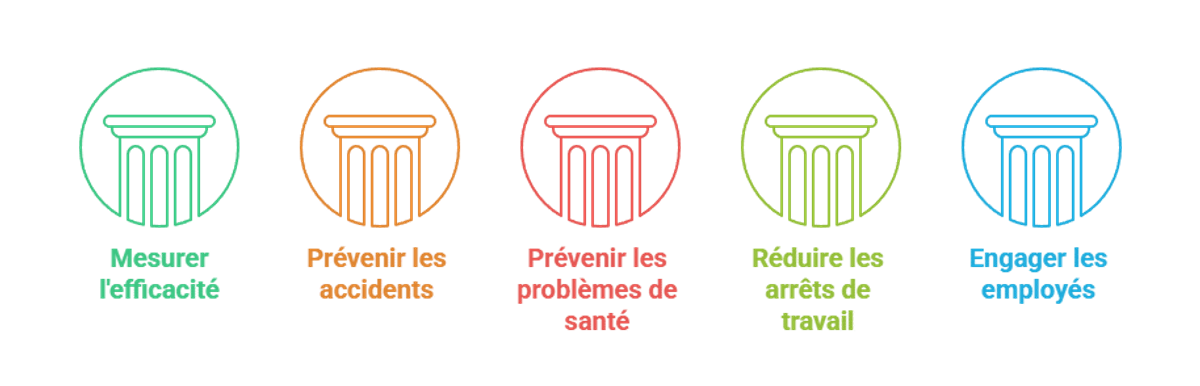
Measuring Effectiveness
The impact of health and safety performance indicators shows up in the ability to measure the effectiveness of the safety measures put in place. This includes reducing accidents, injuries, and occupational illnesses. By tracking these indicators, companies can assess whether their health and safety efforts are paying off.
Accident Prevention
Performance indicators help identify trends and risks. This allows organizations to take preventive measures. This can include training or changes to team composition, such as the number of rear marshals / lead marshals per zone.
Preventing Health Issues
These indicators also help prevent health issues such as depression, stress, or work-related illnesses. They make it possible to identify risk factors in the work environment and to adopt well-being strategies for employees.
Reducing Sick Leave and Illness
Analyzing occupational health indicators helps reduce sick leave and occupational illnesses. By monitoring ergonomics and workload, companies improve employees' overall health.
Employee Engagement
Using safety performance indicators fosters greater engagement within the organization. Employees are more inclined to invest in these practices due to a heightened awareness of the importance of workplace safety. This can result in better adherence to safety protocols and increased vigilance.
What are the main health and safety performance indicators?
There are many health and safety indicators. Their selection depends on the sector and the nature of the company. Here are some common indicators:
- Accident Frequency Rate (AFR): Measures the number of accidents per hour worked.
- Accident Severity Rate (ASR): Assesses the severity of accidents based on the number of workdays lost.
- Number of Near Misses: These unrealized incidents are warning signs of potential accidents.
- Safety Procedure Compliance Rate: Measures how often employees follow established safety procedures.
- Number of Incident Reports: The number of incident reports filed by employees can reflect their commitment to safety.
- Health-Related Absenteeism Rate: Indicates the frequency of health-related absences, including physical and mental illnesses.
- Employee Satisfaction Rate on Working Conditions: Assesses employees' overall well-being in relation to their work environment and conditions.
Tools like CountAct provide you with a selection of essential indicators that are easy to understand. To strengthen safety and prevention within your company in order to look after your employees' well-being.
Simplify your health and safety tracking
CountAct helps you select, track, and visualize the right health and safety performance indicators without the complexity of building your own reporting system.
How do you choose the right health and safety performance indicators?
Choosing the right performance indicators is a crucial step for any company. Each sector has its own needsand priorities when it comes to health and safety. It is therefore essential to define specific indicators that reflect these needs. To do this, here are a few key steps to follow:
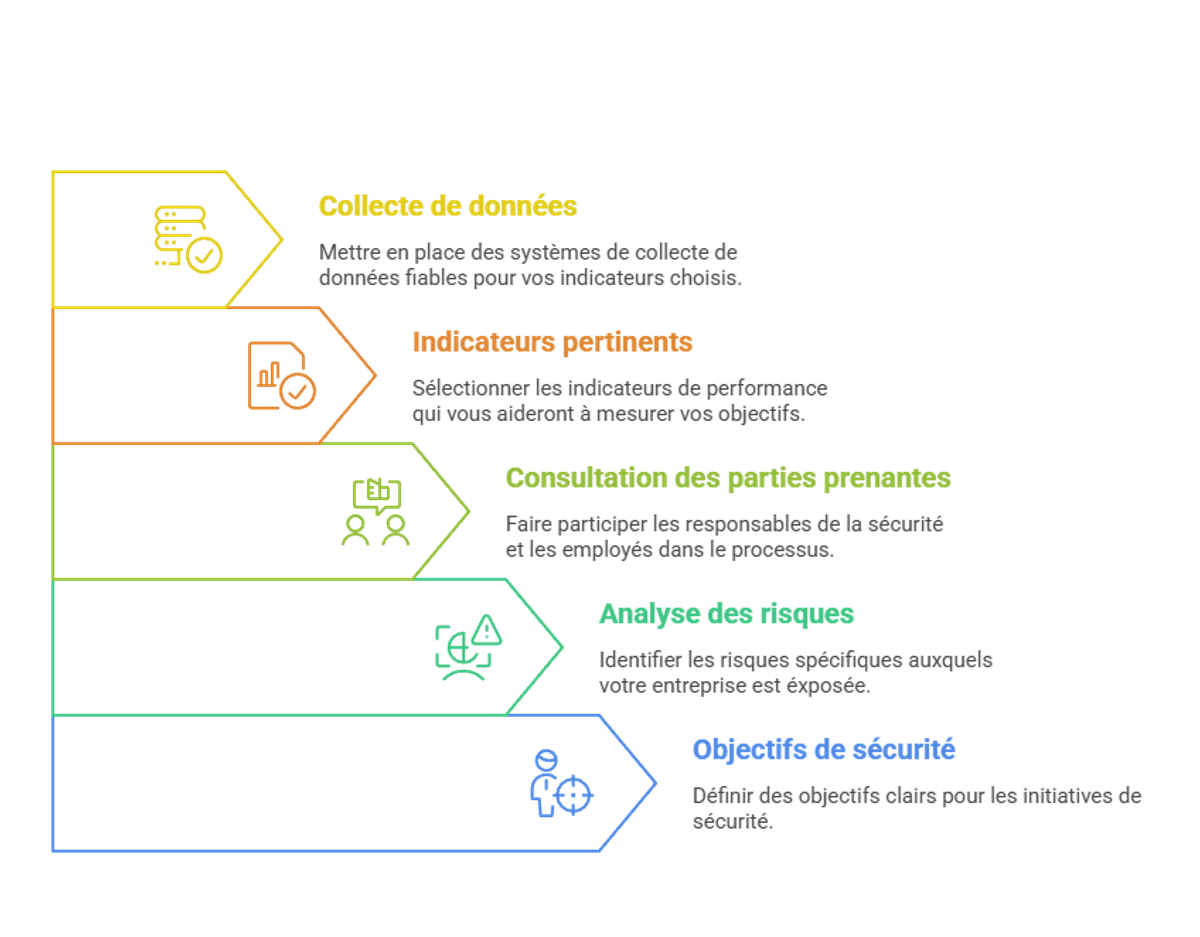
Following the SMART method, indicators should be Specific, Measurable, Achievable, Realistic, and Time-bound. This ensures the impact of performance indicators on health and safety. In this regard, CountAct offers you a solution that lets you stay compliant on safety matters while providing you with the tools you need to easily measure and interpret these indicators.
When selecting an indicator, check that it is Specific, Measurable, Achievable, Realistic, and Time-bound. If it fails on any of these, reconsider it before adding it to your tracking.
How do you effectively track the impact of your health and safety performance indicators?
Tracking indicators is complex. It requires a project manager and a dedicated team. The manager coordinates efforts and ensures data accuracy. The team tracks indicators daily and implements corrective measures. This approach ensures better organization and rapid responsiveness to safety issues. CountAct simplifies this process by providing an intuitive solution that automates data collection, offers real-time analytics and generates relevant reports. This way, you can respond quickly to potential risks, effectively and effortlessly strengthening your company's safety.
SécuQuiz
Test your knowledge
Question 1 sur 5
What does the acronym KPI stand for in the context of health and safety?
Sources & references
- Why are health and safety performance indicators important? — ressources.inrs.fr
- Choosing the right performance indicators — www.inrs.fr
Frequently asked questions
Tom BasinStrategic Partnerships Manager
Holding a Master's degree in risk prevention, Tom Basin serves as Partnerships Manager at CountAct, contributing to the development and rollout of the first turnkey crisis management support solution, with the aim of putting security back at the heart of businesses. His experience, along with his training at the Master's level and at the Institut national des hautes études de la sécurité et de la justice, gives him a broad perspective on security and crisis management.