
Identifying the key risks
In a world where identifying major risks is more crucial than ever, preventing and responding to these risks has become a central concern for companies. This article will explore in depth the nature of major risks, strategies for identifying those specific to your organization, and methods for developing an effective action plan to minimize these risks.
What is a major risk?
A major risk is defined as an event with potentially serious consequences for people and/or the environment. Indeed, it is characterized by low frequency but high intensity. As a result, companies exposed to such risks must inform nearby populations of potential dangers. These risks, generally difficult to anticipate, can arise from natural disasters, industrial accidents, technological failures, or health crises.
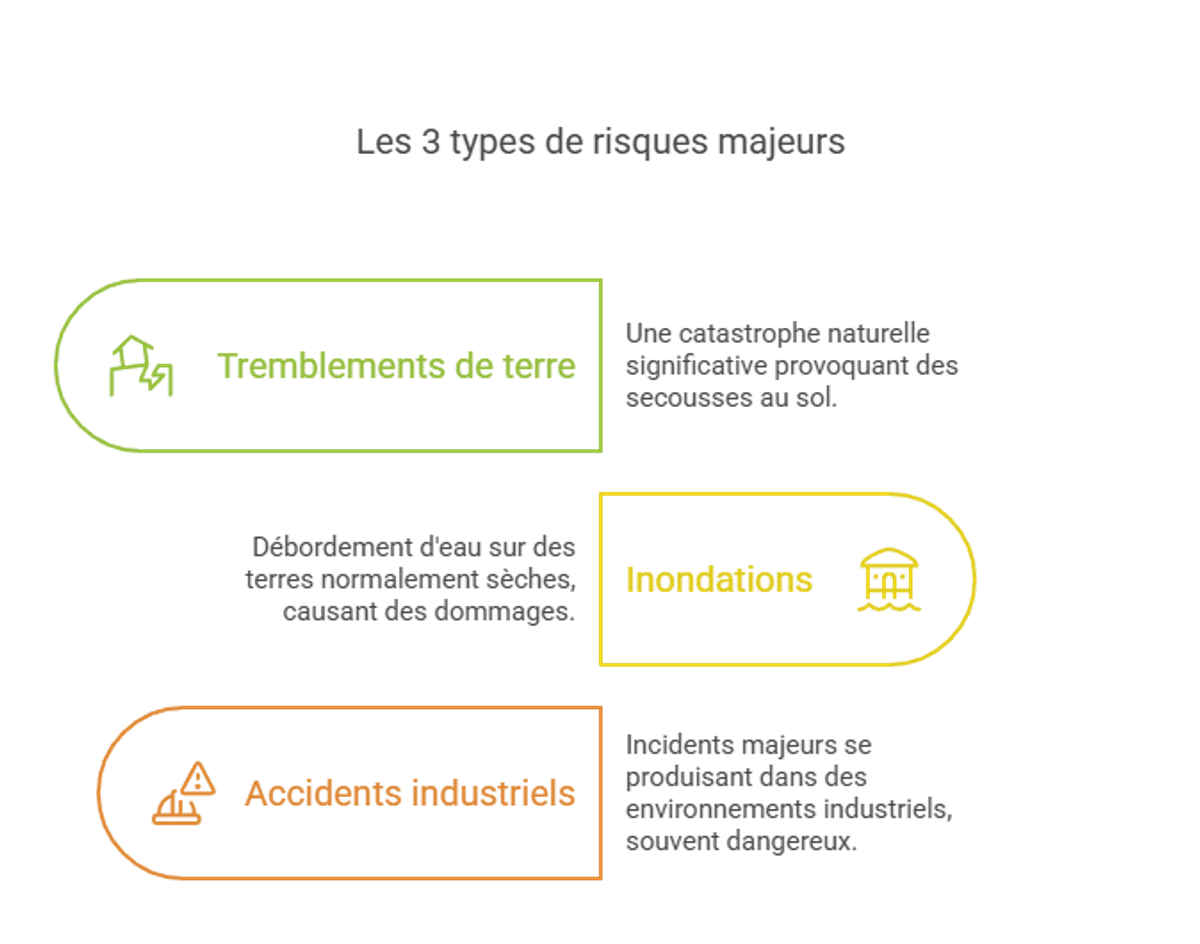
How to identify major risks for your company?
To effectively identify the major risks likely to affect your company, it is crucial to follow a systematic and detailed approach.
Analysis of the external environment
Start by examining your company's external environment. This includes analyzing historical data on natural or technological disasters in your region.
Assessment of internal vulnerabilities
Inspect facilities, equipment, and internal processes to identify weak points that could be exacerbated in the event of a disaster.
Consulting experts
After a crisis, it is imperative that you contact your insurance company to assess the damage sustained and file a claim to obtain adequate compensation. Work with risk consultants or specialized engineers to get an expert assessment of the risks specific to your industry and location. With this in mind, CountAct has established itself as a specialist in the field of major risks and offers its expertise to assist you in identifying your vulnerabilities through an in-depth audit. Contact us to get an audit of your major risks.
Reach out to your insurance company as soon as possible after a crisis. Early contact speeds up damage assessment and claims processing, and helps ensure you don't miss policy-specific deadlines for reporting an incident.
Developing an action plan
Developing a solid action plan is essential to minimize the impact of major risks on your company. This plan must be comprehensive, structured, and tailored to the specific characteristics of your organization. Indeed, the business owner is responsible for crisis management, whether it involves an evacuation or a lockdown, and currently, not all companies are prepared to face such situations.
Defining objectives
Before diving into the technical details, determine what you want to achieve with your risk management. This may include protecting assets, ensuring employee safety, or regulatory compliance.
Developing mitigation plans
For each identified risk, develop specific strategies to reduce its likelihood or mitigate its effects.
Integration and training
Successful integration of the internal organization plan (IOP) is a crucial element for the effective implementation of risk management. This is because it includes not only the application of specific mitigation plans but also the ongoing training of all employees. The CountAct solution is a recognized means of prevention and protection. Adopting the CountAct solution leads to a significant improvement in processes, thereby affirming your commitment to your employees' safety. If you wish to establish a continuous improvement approach, feel free to contact us by directly booking an appointment!
Ready to build your company's risk management plan?
Turn these steps into a concrete action plan tailored to your organization, with expert support at every stage.
SécuQuiz
Test your knowledge
Question 1 sur 5
A major risk is characterized by high frequency and low intensity.
Sources & references
- risque majeur — www.youtube.com
- Contactez-nous pour obtenir un audit de vos risques majeurs. — calendar.google.com
Frequently asked questions
Tom BasinStrategic Partnerships Manager
Holding a Master's degree in risk prevention, Tom Basin serves as Partnerships Manager at CountAct, contributing to the development and rollout of the first turnkey crisis management support solution, with the aim of putting security back at the heart of businesses. His experience, along with his training at the Master's level and at the Institut national des hautes études de la sécurité et de la justice, gives him a broad perspective on security and crisis management.