
QSE Performance: Assessment and Optimization in 2026
Quality, Safety and Environment (QSE) management is crucial in today's professional landscape. Prioritizing health and safety aspects has become imperative. However, many companies struggle to identify effective methods to improve their QSE performance. They often find themselves facing complex challenges without knowing where to start. This lack of clarity can hinder their ability to establish robust QSE practices. Our goal is to provide clear, practical guidance to address this complex issue.

Optimizing QSE: Identifying Key Performance Indicators
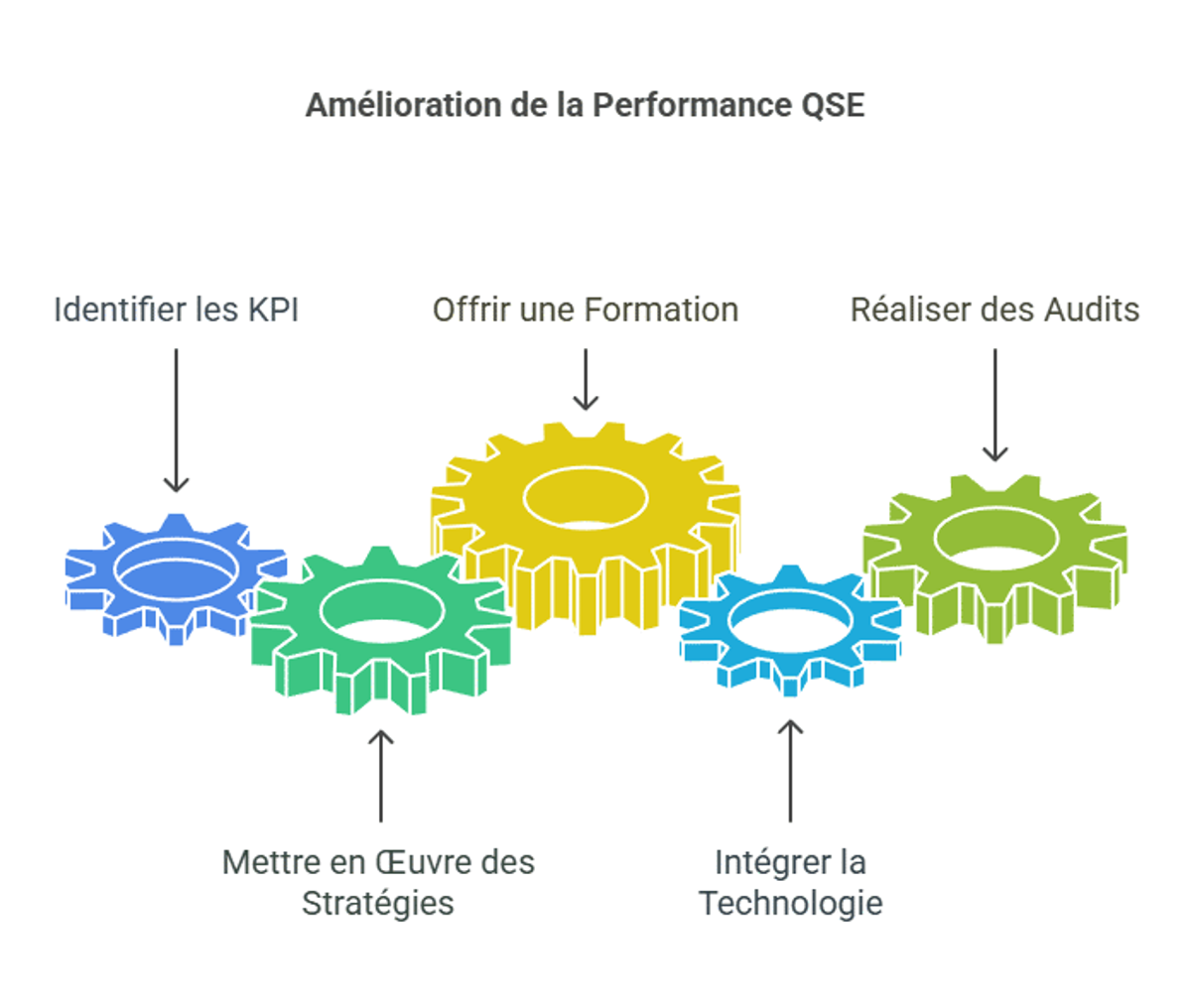
Faced with the challenges of QSE improvement, methods exist to effectively identify the main levers for action. Indeed, performance indicators (KPIs) prove essential in this process. By appointing a QSE manager to analyze KPIs dedicated to health and safety, companies can assess the effectiveness of their existing measures. This helps identify the strengths and weaknesses of their safety strategies. For example, a high accident rate could indicate a need for additional training. This helps companies ensure quality and safety by standardizing procedures and strengthening the safety culture. In this regard, CountAct offers a digital solution that makes it easier for companies to comply with legal safety obligations.
Improving QSE Performance: Strategies and Essential Performance Indicators
Once the QSE improvement levers have been identified through KPIs, the implementation of concrete strategies becomes the next crucial step. Here are some practical tips for effectively improving QSE performance within a company:
- Increased training and awareness: Invest in regular training programs to raise staff awareness of safety practices and environmental standards. This includes sessions on emergency procedures, waste management, or training as a quality, safety and environment coordinator. Indeed, these quality, safety and environment coordinators become drivers of compliance and prevention.
- Technological integration: Use technology to improve the monitoring and management of QSE processes. For example, safety management software can help track incidents and analyze trends.
- Process audit and review: Carry out regular internal audits to examine current QSE practices. This helps identify gaps and implement the corrective actions needed to strengthen compliance and performance.
Before making improvements, it is crucial to ensure that the action or tool being considered is well mastered internally. This should help reduce non-conformities or QSE issues. Standardization may then involve aligning QSE policy with current standards.
Maximizing QSE Performance: Audits and Compliance with ISO Standards
Having identified improvement levers and implemented practical strategies, the next step is to achieve compliance with ISO standards. Audits, based on ISO standards, play a crucial role in the ongoing evaluation and improvement of QSE performance.
- Compliance with ISO standards: ISO standards (9001, 14001, 45001) provide global frameworks for QSE excellence. These standards are currently being revised: the new ISO 14001:2026 edition has been published since April 2026, with a transition period until the end of 2028 for companies still certified under the 2015 version; ISO 9001:2026 is expected in October 2026; ISO 45001 is also under revision, with publication targeted for 2027. Companies should therefore plan these transitions with their certification body rather than waiting for their current certificate's deadline. By adopting KPI-based strategies, companies prepare effectively for audits. This preparation ensures compliance and identifies areas for improvement.
ISO 9001 (quality), ISO 14001 (environment), and ISO 45001 (occupational health and safety) can be implemented separately or merged into a single integrated management system, cutting down on duplicate audits and documentation.
- Using audit results for continuous improvement: Audit results, particularly those aligned with ISO standards, provide valuable insight into areas for improvement. Companies must use this information to implement corrective and preventive actions, thereby strengthening their overall quality, health, safety and environment performance.

Building and maintaining a strong safety culture within the company is a fundamental aspect of improving QSE performance. It is essential to recognize that achieving ISO standards is not an end in itself. Indeed, safety culture should be maintained as a fundamental and ongoing element of QSE performance. This is why it is necessary to appoint a QSE manager to sustain this culture. Investing in a strong safety culture demonstrates the company's commitment to continually excelling in its QSE performance, well beyond mere compliance with ISO standards.
Ready to strengthen your QSE performance?
Get expert support to define the right KPIs, prepare for ISO audits, and build a lasting safety culture within your organization.
SécuQuiz
Test your knowledge
Question 1 sur 5
What is the first step recommended to identify effective levers for improving QSE performance?
Sources & references
- Quality, Safety and Environment (QSE) — bigmedia.bpifrance.fr
- Revision of ISO 9001 and ISO 14001 standards — afnor.org
Frequently asked questions
Tom BasinStrategic Partnerships Manager
Holding a Master's degree in risk prevention, Tom Basin serves as Partnerships Manager at CountAct, contributing to the development and rollout of the first turnkey crisis management support solution, with the aim of putting security back at the heart of businesses. His experience, along with his training at the Master's level and at the Institut national des hautes études de la sécurité et de la justice, gives him a broad perspective on security and crisis management.