
The Water Conservation Plan
Today, scientific reports are sounding the alarm about the decline of groundwater levels and the pollution of waterways. In this respect, water sobriety has become essential. In this article, we will explore the various steps for drafting a water sobriety plan, the challenges to overcome, as well as the strategies and actions to undertake.
What is a water sobriety plan?
A corporate water sobriety plan is a coordinated set of actions aimed at reducing water consumption and improving the efficiency of its use. As such, it goes beyond simple water-saving measures; it involves a redesign of the processes for managing water within the company. From a technological standpoint, this includes water recycling systems, but also a behavioral dimension to encourage employees to adopt good practices.
The objectives of a water sobriety plan
The objectives of a corporate water sobriety plan are multiple:
Reducing overall water consumption.
Lowering the costs of water use.
Complying with environmental regulations regarding water management.
Strengthening the brand image and CSR reputation.
Thus, to achieve the objectives set out in a water sobriety plan, it is essential to bring together and mobilize a range of key stakeholders.
The stakeholders involved in implementing a water sobriety plan
Implementing a water sobriety plan requires the involvement of various stakeholders:
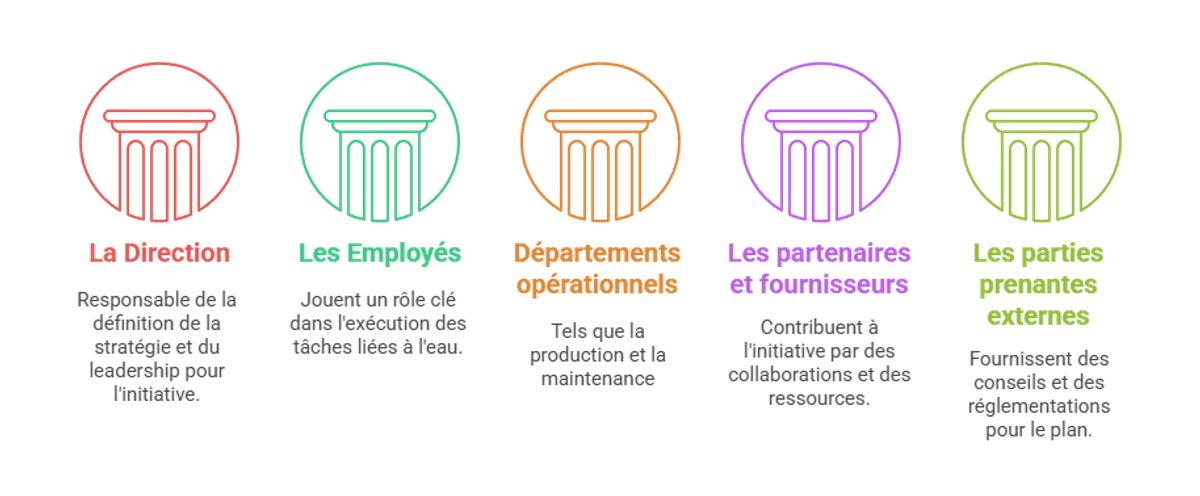
Once stakeholders are informed and involved, it is crucial to follow precise steps to put a plan in place.
How to set up a water sobriety plan?
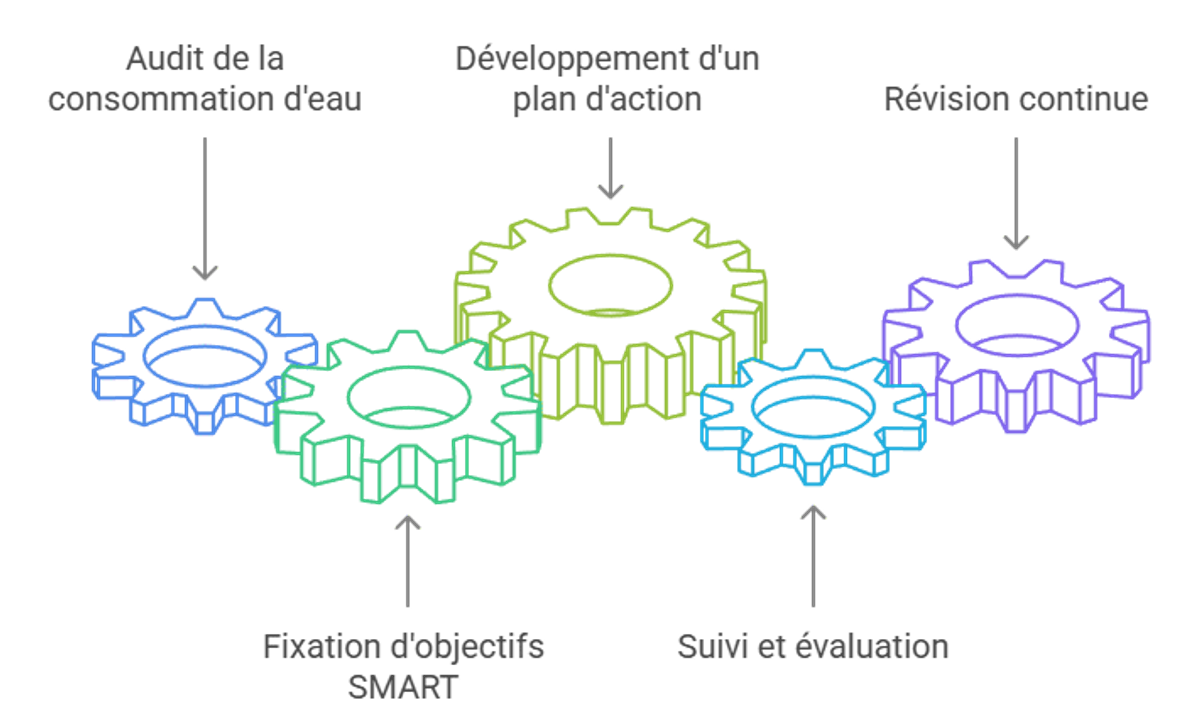
Setting up a water sobriety plan requires a methodical approach. Here is a multi-step process for establishing a plan:
Step 1: Audit and analysis of water consumption
Start with a detailed audit of current water usage across all departments of the company. The goal is to identify where and how water is consumed or wasted.
Don't rely on estimates: install sub-meters on your main water-consuming processes before setting targets. An audit based on real, department-by-department data is what makes the rest of the plan credible and measurable.
Step 2: Setting realistic and measurable objectives
Based on the audit, set specific, measurable, achievable, relevant, and time-bound objectives (SMART). Indeed, these objectives could include percentage reductions in water consumption, reuse targets, and benchmarks for installing low-consumption equipment.
Step 3: Designing an action plan
Develop an action plan that lists the steps to achieve the objectives. The plan can incorporate innovative technologies, water treatment processes...
Step 4: Monitoring and evaluation
Next, set up monitoring systems to measure water consumption and compare performance against objectives. Use this data to assess the effectiveness of the plan and make adjustments.
Step 5: Review and continuous improvement
Finally, carry out periodic reviews of the water sobriety plan. This periodicity will allow for incorporating field feedback, new technologies, and industry best practices.
Policies and regulations regarding water management
Water management is governed by a series of laws and regulations. Here is an overview of these: 1. National legislation
Water laws: Each country has its own laws governing the use and protection of water. These often cover aspects such as water withdrawal, pollution, and conservation.
Water quality standards: Specific standards may be established to regulate the quality of water discharged by industries.
2. Standards and certifications
ISO 14046: This international standard provides guidelines on the impact of company activities on water resources.
Environmental certifications: Labels such as LEED for buildings or WaterSense for products can also influence corporate water management.
Not sure how these regulations apply to your company?
Water laws, quality standards, and certifications like ISO 14046 can be complex to navigate on your own. CountAct's experts can help you assess your obligations and turn compliance into part of your water sobriety strategy.
Choose CountAct to build your water sobriety plan
To meet specific needs while complying with current regulations, here is how CountAct supports you:
Initial Assessment: First, CountAct begins with a diagnosis of your current water management practices, identifying strengths and areas for improvement.
Setting Objectives: Next, in collaboration with you, CountAct helps you set clear and measurable objectives for your water sobriety plan.
Strategic Planning: Then, CountAct develops a detailed action plan including practical recommendations for achieving the set objectives.
Implementation and Monitoring: CountAct assists you in implementing the plan, providing ongoing support to adjust strategies as needed.
Reporting and Communication: Finally, CountAct helps you document and communicate the results achieved, strengthening your brand image as a company that is responsible and committed to sustainable water management.
Book an appointment today to set up your water sobriety plan. Indeed, water sobriety is more than an environmental necessity; it is a vital strategy for ensuring the long-term sustainability of the company. It has become more important than ever for companies in all sectors to adopt and implement water sobriety plans.
SécuQuiz
Test your knowledge: Corporate Water Sobriety Plans
Question 1 sur 5
What is the first step in setting up a water sobriety plan?
Sources & references
- Certifications environnementales — www.ecologie.gouv.fr
- Prenez rendez-vous dès aujourd’hui — calendar.google.com
Frequently asked questions
Tom BasinStrategic Partnerships Manager
Holding a Master's degree in risk prevention, Tom Basin serves as Partnerships Manager at CountAct, contributing to the development and rollout of the first turnkey crisis management support solution, with the aim of putting security back at the heart of businesses. His experience, along with his training at the Master's level and at the Institut national des hautes études de la sécurité et de la justice, gives him a broad perspective on security and crisis management.