
The importance of safety glasses
Safety Glasses: How to Choose the Right Ones?
Safety glasses play a crucial role in protecting workers. Indeed, they prevent eye injuries caused by various occupational hazards. This article aims to present the different types of safety glasses, their benefits, and help you choose the ones suited to each situation.
Why Are Safety Glasses Essential?
Eyes are exposed to various risks and hazards in the workplace. These include flying particles, chemical splashes, and radiation. Moreover, eye accidents can result in temporary or permanent injuries, affecting productivity and generating high medical costs. Thus, wearing appropriate safety glasses significantly reduces these risks and ensures a safer work environment.
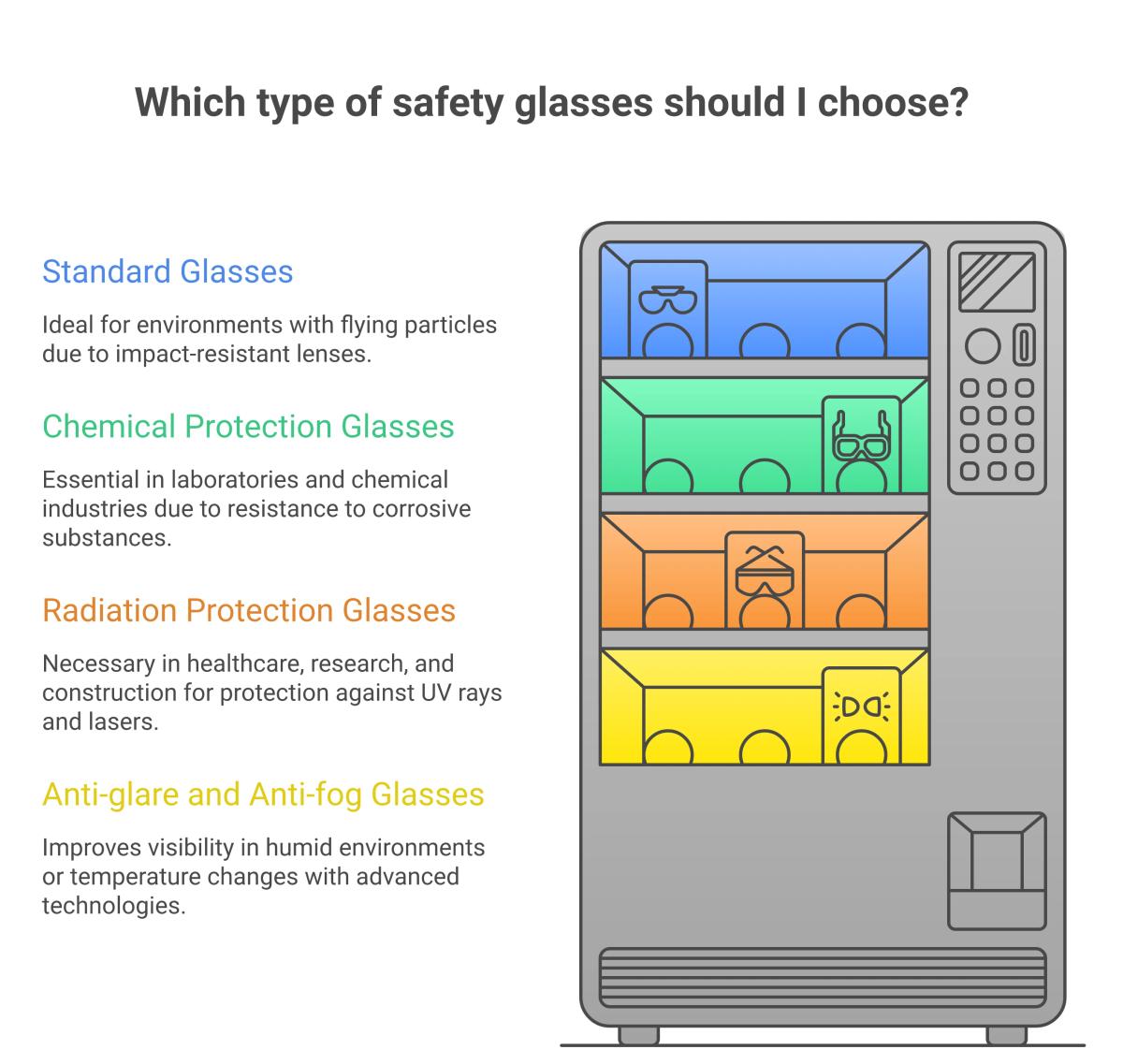
The Different Types of Safety Glasses
Standard Safety Glasses
Standard safety glasses are designed to protect against physical impacts. Indeed, they feature impact-resistant lenses and are ideal for environments where flying particles are present.
Chemical Protection Glasses
Chemical protection glasses are made from materials resistant to corrosive substances. Thus, they are essential in laboratories and chemical industries, providing an effective barrier against hazardous splashes.
Radiation Protection Glasses
Radiation protection glasses protect the eyes from UV rays, lasers, and other harmful radiation. As such, they are essential for workers in the healthcare, research, and construction sectors, where radiation exposure is common.
Anti-Glare and Anti-Fog Protective Glasses
Anti-glare and anti-fog protective glasses use advanced technologies to improve visibility in difficult conditions. Indeed, they are particularly useful in humid environments or those subject to temperature changes, ensuring optimal comfort.
How to Choose the Right Safety Glasses?
Assessing Specific Risks
The first step in choosing the right protective safety glasses is to carry out a risk assessment of the work environment. Indeed, identifying potential hazards, such as particles, chemicals, or radiation, is crucial for selecting adequate protection.
Compliance with Safety Standards
Make sure the chosen glasses comply with current safety standards. Since 12 November 2025, the reference European standard for certifying new equipment is EN ISO 16321-1, which progressively replaces EN166. These standards guarantee that the glasses provide sufficient protection against identified risks, whichever version was in force at the time of purchase.
Since 12 November 2025, only the EN ISO 16321-1 standard is accepted for certifying new safety glasses in Europe: it progressively replaces EN166 (as well as EN170, EN171 and EN172, the filter-specific standards for UV, infrared and sunglare). Equipment already certified under EN166 remains valid until its certification expires (five years maximum). Always check the marking on the frame or lenses, and ask your supplier to confirm which standard the equipment was certified under.
Comfort and Fit Criteria
Comfort and adjustability of the glasses are essential for prolonged wear. Indeed, well-fitted glasses reduce fatigue and irritation, thereby increasing productivity. Additionally, compatibility with other protective equipment is also an important criterion.
Durability and Maintenance
Protective glasses must be durable enough to withstand daily wear. Choose sturdy materials and follow maintenance tips to extend the lifespan of the glasses. In summary, safety glasses are essential for protecting workers' eyes against various occupational risks. Choose glasses suited to each work situation to ensure optimal protection. Assess the risks, comply with safety standards, and prioritize comfort and durability. Investing in quality safety glasses is essential to ensure the safety and well-being of employees. If you would like to equip your teams with protective glasses, feel free to contact us!
Ready to Equip Your Team with the Right Safety Glasses?
Explore our full range of certified safety glasses tailored to every workplace risk, from impact and chemical protection to anti-glare and anti-fog technology.
SécuQuiz
Test your knowledge
Question 1 sur 5
What is the primary purpose of chemical protection glasses?
Sources & references
- affectant la productivité et générant des coûts médicaux élevés — safevision.com
- nous contacter ! — calendar.google.com
- ISO 16321-1:2021 official standard — iso.org
Frequently asked questions
Tom BasinStrategic Partnerships Manager
Holding a Master's degree in risk prevention, Tom Basin serves as Partnerships Manager at CountAct, contributing to the development and rollout of the first turnkey crisis management support solution, with the aim of putting security back at the heart of businesses. His experience, along with his training at the Master's level and at the Institut national des hautes études de la sécurité et de la justice, gives him a broad perspective on security and crisis management.